We’ve lived in Rancho Cielo for 34 years, and we truly enjoy our neighborhood and our home. Like many residents, we’ve gradually made improvements over the years to better prepare for the wildfire risks that come with living in such a beautiful area.
Most of my efforts have focused on embers. Unlike flames, embers can travel several miles ahead of a wildfire, carried by Santa Ana winds, where they search for small places to settle and ignite combustible materials. Because of that, I’ve spent considerable time researching home hardening, talking with neighbors, and inviting the Orange County Fire Authority (OCFA) to perform one of their free Home Assessments. The visit was extremely helpful, identifying both areas where improvements could be made and others that were already providing good protection. The assessment is free, takes about an hour, and provides personalized recommendations based on your home’s location, construction, and surroundings. I highly recommend taking advantage of this valuable service.
One project that came out of that visit was upgrading the vents on my home.
Why Are Vents Important?
Our homes need vents to allow air to circulate through attics, soffits, and garages. Unfortunately, those same openings can also provide a pathway for wind-driven embers.
Many Rancho Cielo homes were originally built with 1/4-inch metal screening, which was common at the time they were constructed. Today, OCFA recommends replacing those screens with 1/8-inch metal mesh, which provides significantly better protection against ember intrusion while still allowing proper ventilation.
For many homeowners, replacing the screening is a relatively inexpensive improvement. Some people choose to do the work themselves, while others hire a handyman or have the screens replaced while roofing work is being performed. The screening itself is inexpensive, and this simple upgrade can make a meaningful improvement in ember resistance.
Where Are the Vents?
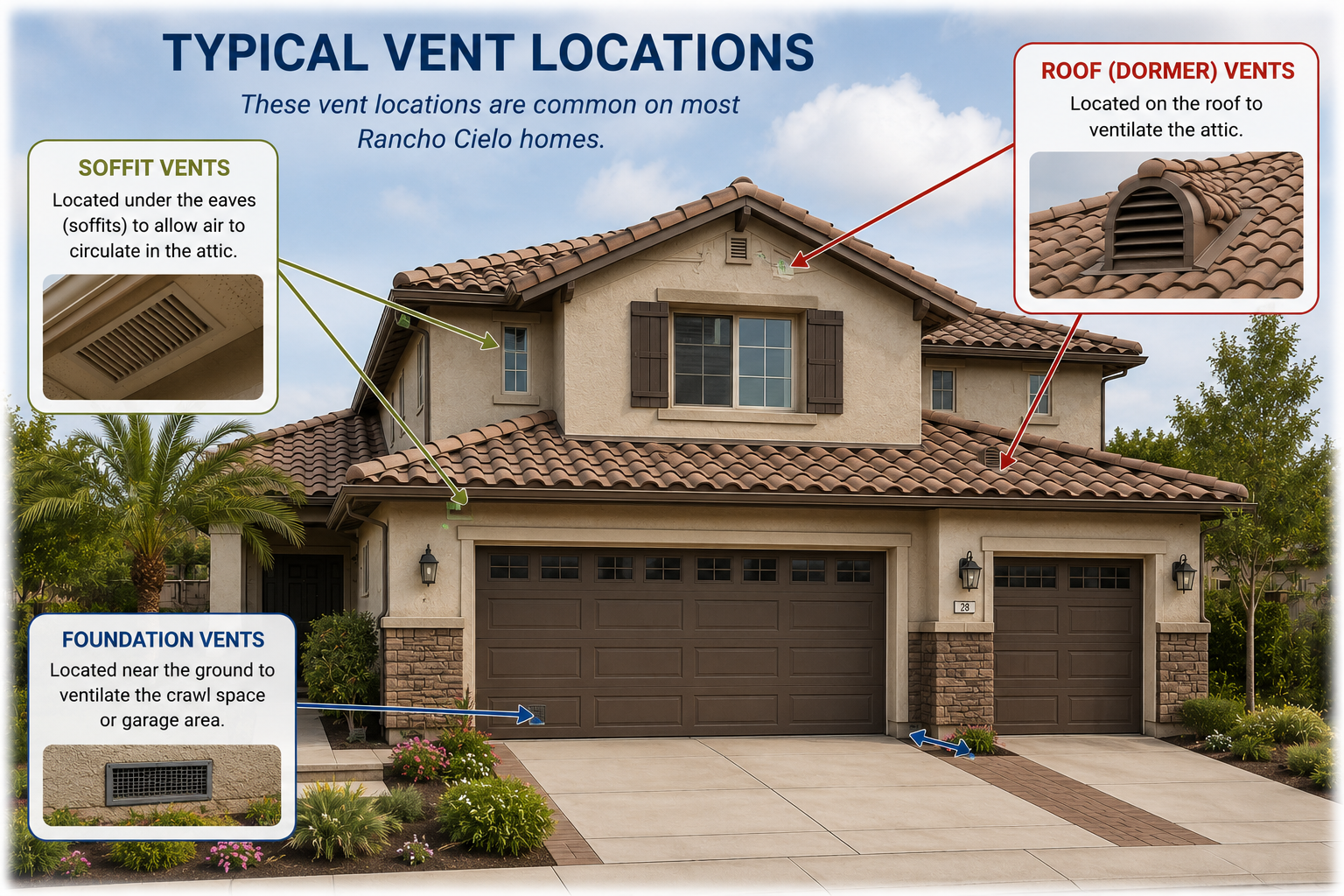
Most Rancho Cielo homes have three types of vents:
- Foundation vents are located near ground level and provide ventilation into the garage or crawl space.
- Soffit vents are located beneath the roof overhangs (the eaves). These deserve special attention because wind-driven embers can collect beneath roof overhangs before finding their way into vulnerable openings.
- Roof (dormer) vents are located on the roof and provide ventilation for the attic. Because they are directly exposed to the weather, they are another important part of a home’s wildfire protection strategy.
Every home is a little different, so the number and location of vents will vary.
Another Option
While researching this project, I also learned about a newer generation of engineered ember-resistant vents.
Rather than relying solely on metal screening, these replacement vents incorporate additional design features intended to reduce ember intrusion while maintaining proper ventilation. They represent another option for homeowners who may have greater wildfire exposure or who simply want to further harden their homes.
Because my home sits on the ridge at the top of Rancho Cielo, directly facing the Cleveland National Forest and the prevailing Santa Ana winds, I decided this additional level of protection made sense for my particular location. Homes in other parts of the community may have different exposure, and many homeowners may decide that replacing the existing screens with 1/8-inch mesh provides the level of protection they are looking for.
Available Products
The two engineered vent systems I encountered most frequently during my research were Vulcan and BrandGuard. Both are well-established products that meet California wildfire requirements for their intended applications and are installed by authorized contractors familiar with the products.
Although each manufacturer uses a different engineering approach to reduce ember intrusion, both are designed with the same goal: helping prevent embers from entering vulnerable areas of the home while maintaining the ventilation the home requires.
If you decide to explore this option, I recommend talking with qualified installers, asking questions, and obtaining more than one estimate. Every home is different, and what makes sense for one property may not be the best solution for another.
Every Improvement Matters
Upgrading vents is just one part of making a home more wildfire resilient. Landscaping, regular maintenance, keeping roofs and gutters free of debris, maintaining exterior paint and caulking, and reducing combustible materials around the home all work together to reduce the opportunities for embers to ignite a structure.
One thing I’ve learned through this process is that wildfire preparedness doesn’t happen all at once. Every thoughtful improvement—large or small—helps make our homes more resilient. The goal isn’t perfection; it’s making steady progress over time.
To learn more about wildfire preparedness and home hardening, please visit the FireWise section of our website, where you’ll find additional articles and links to trusted resources from OCFA, CAL FIRE, and other organizations.
Leave a Reply
You must be logged in to post a comment.