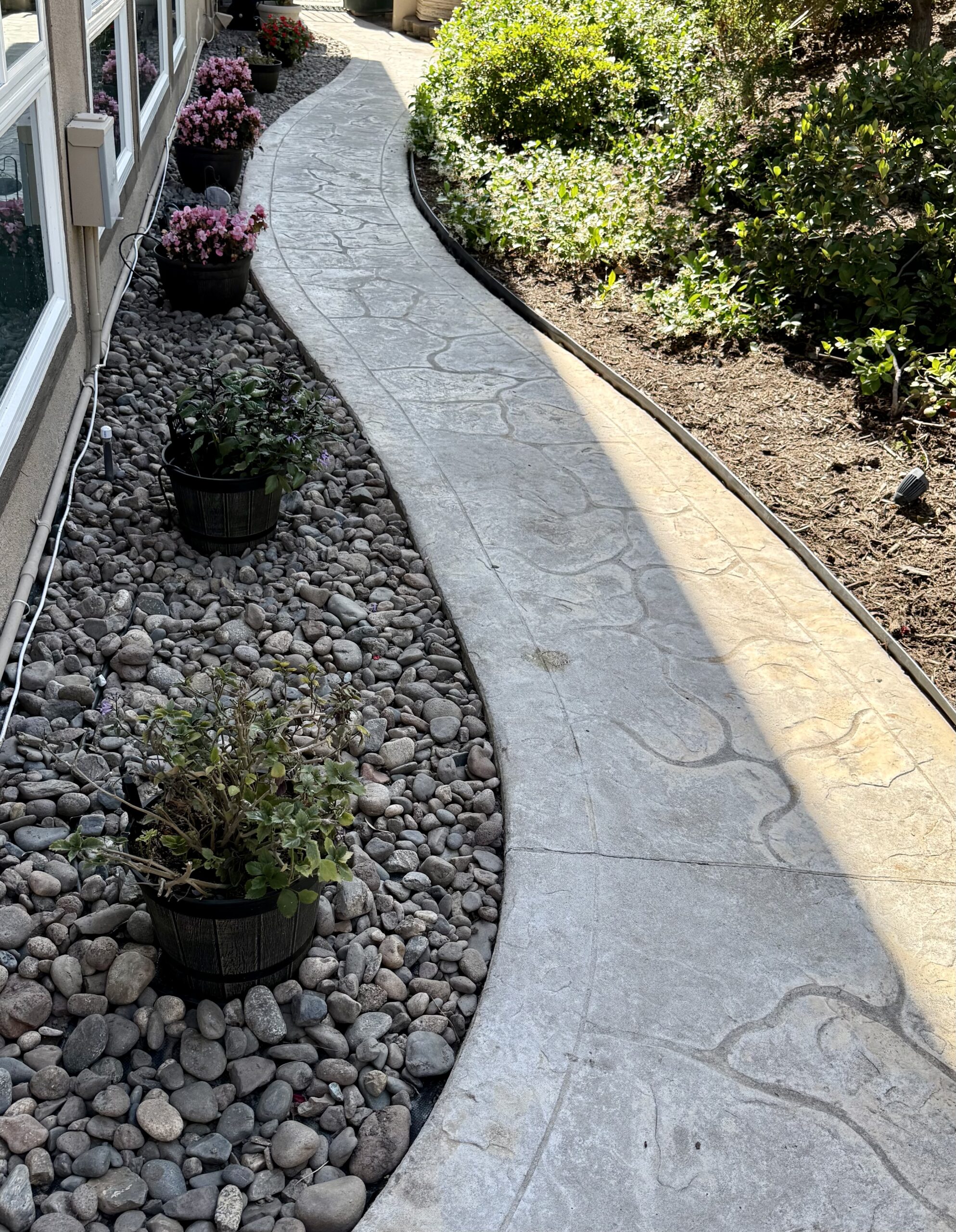
Wildfire experts often talk about the area immediately around a house as the 0–5 foot zone. This area, right next to the house, may be the most important area to keep clear of materials that can ignite from embers.
If embers land right next to a wall, window, or door and ignite something in that area, the fire can quickly spread to the structure. Because of this, many fire safety guidelines recommend that the area immediately next to the house be kept as non-combustible as possible.
Things that can increase risk in this area include:
- Bark or wood mulch right next to the house
- Dry leaves and pine needles
- Wooden planters
- Outdoor cushions and doormats
- Firewood stored against the house
- Shrubs or plants touching walls or windows
- Wood fencing attached directly to the house
- Debris or stored items along walls
Many homeowners are choosing to use gravel, rock, pavers, or concrete near the foundation instead of mulch or plants right next to the house. Plants and landscaping can still be used, but moving them a few feet away from the structure can reduce risk.
Simple things like keeping this area clean, avoiding combustible materials next to walls, and making sure nothing is stored against the house can make a meaningful difference.
Small changes in this area are often some of the easiest and most effective steps homeowners can take to reduce wildfire risk around their homes.
About the photo: The author had a OFCA home inspection ( free, and it provided great info ) to discuss fire safe options. This area is a work in progress, but has significantly reduced the risk of ignition through use of fire resistant materials and plants. Plants were removed from the ground, and placed in resin planters, each with its own drip feed. If a fire occurs, they can be moved completely away from the house, leaving only the non-flammable stones for the embers to “burn”. Note the wood trim around the windows. Now there is no way for a flame to start them on fire. In addition, no flame can penetrate the weep sill at the bottom of the stucco. This is a much better defense against embers, and still show green down this side of the pathway. The photo is used to illustrate that we can maintain beauty but focus on being proactive to reduce the risk of flames at the side of our homes.